Jacket Manufacturing Insights 6 min read
How to Choose the Right Fabric for Custom Jackets
Compare fabrics for bomber, technical shell, denim, varsity, leather-look and fleece jackets, including weight, structure, lining, performance claims and care.
Introduction
The best fabric for a jacket is not necessarily the heaviest, most expensive or most technical-looking option. It is the material that works with the intended silhouette, use conditions, finish, decoration and target price point.
For a made-to-order jacket collection, fabric selection should happen alongside construction planning. This guide outlines the considerations behind six common jacket categories and explains how to discuss fabric requirements with a manufacturing partner.
Before choosing a fabric, answer five questions
First, what is the jacket for: fashion, daily wear, team wear, warmth or active outdoor use? Second, what silhouette should it hold: structured, relaxed, cropped or draped? Third, what season and layering conditions matter? Fourth, will the garment use embroidery, printing, patches, washing or special trims? Fifth, how should customers care for it?
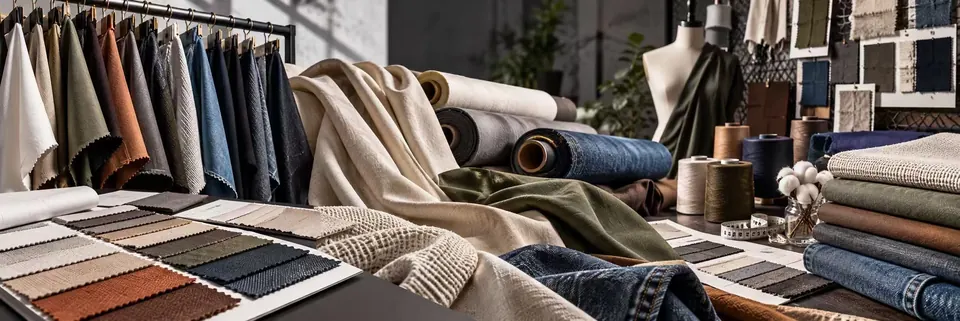
These questions narrow the fabric direction before comparing fiber composition, weight and price. Fabric swatches and physical samples remain important because specifications alone do not fully describe hand feel, drape and surface appearance.
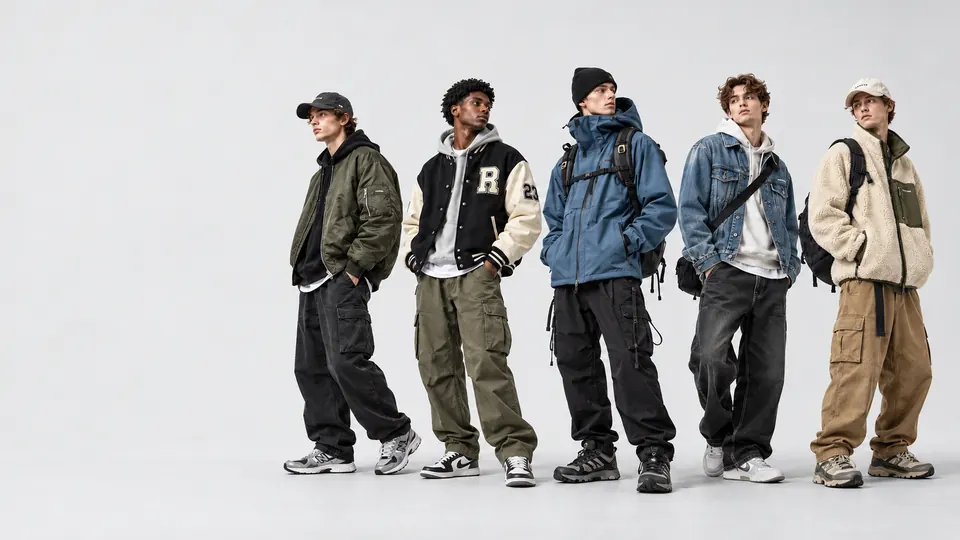
1. Bomber jackets: balance volume with structure
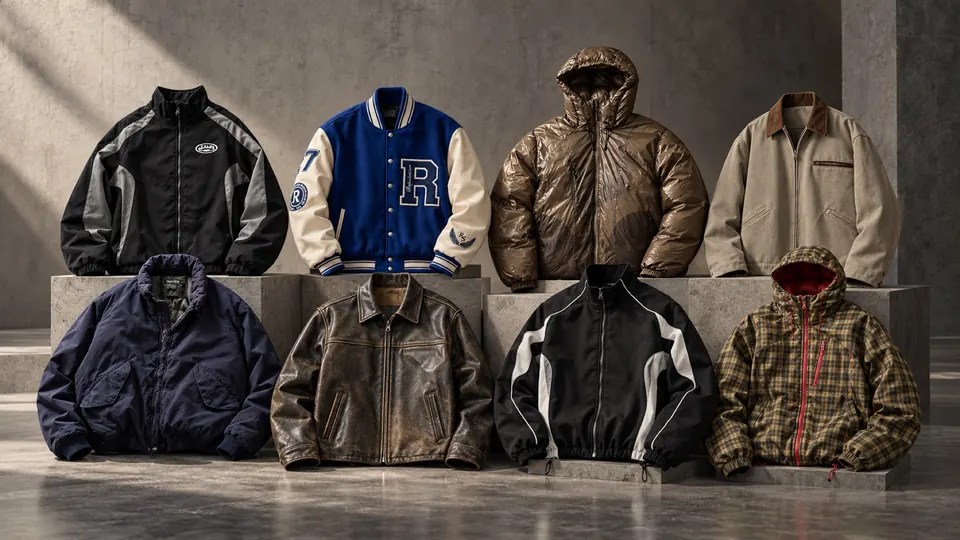
Bomber jackets can be developed in nylon-like or polyester woven fabrics, cotton blends, satin-inspired shells and other materials suited to the desired look. A crisp woven fabric can emphasize the compact body and rounded sleeve, while a softer or shinier surface changes the visual character.
Consider lining weight, rib collar/cuff recovery, hem tension and zipper behavior together. A shell that feels attractive as a swatch may look different once gathered into a ribbed hem. Confirm whether the garment is intended as lightweight fashion outerwear or a more insulated piece before selecting filling and lining.
2. Technical shell jackets: define performance carefully
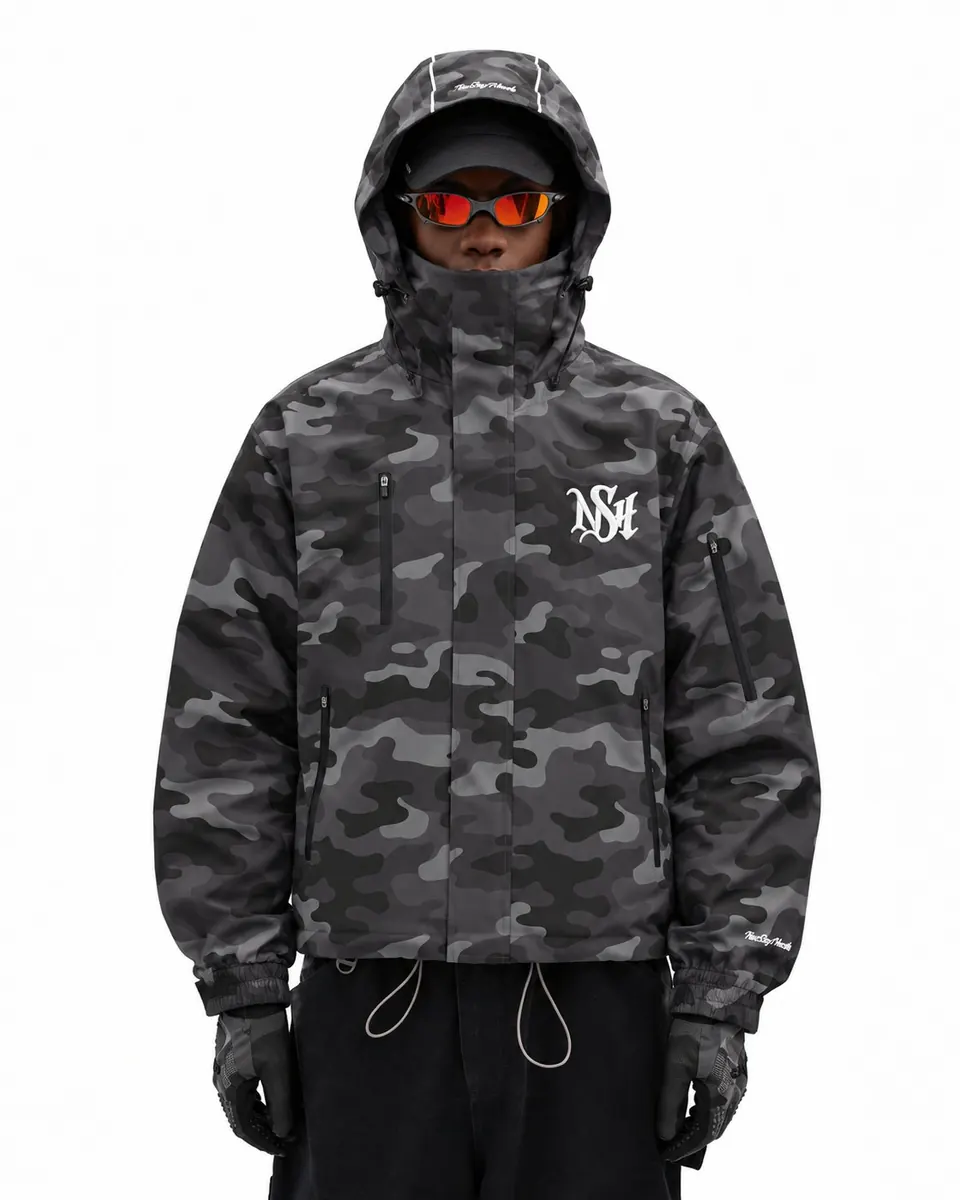
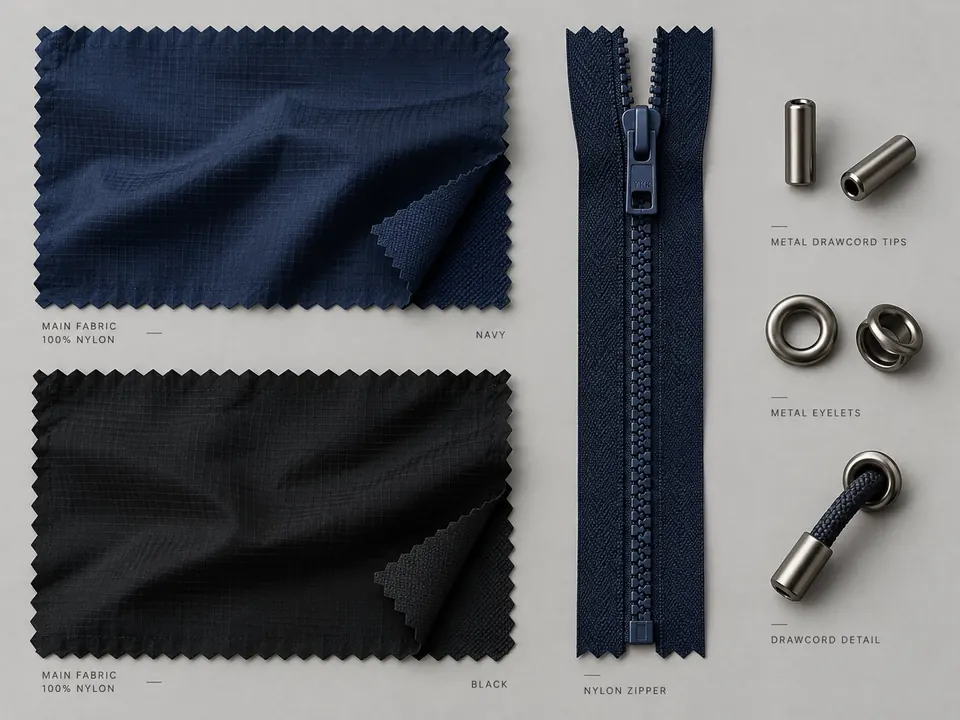
Technical shell development may involve tightly woven synthetics, coated fabrics or multilayer laminates, depending on the use case. However, water-repellent surface treatment is not the same as verified waterproof construction. Waterproof performance depends on the material system and often on seams, closures, design details and the method of testing.
Ask what is actually required: light rain resistance, wind protection, breathability, packability or more demanding weather performance. A credible specification identifies test methods and acceptance criteria rather than relying on vague labels such as ‘waterproof’ or ‘breathable.’ Hood fit, seam placement, ventilation and zipper selection should be evaluated with the fabric.
3. Denim jackets: weight, wash and construction interact
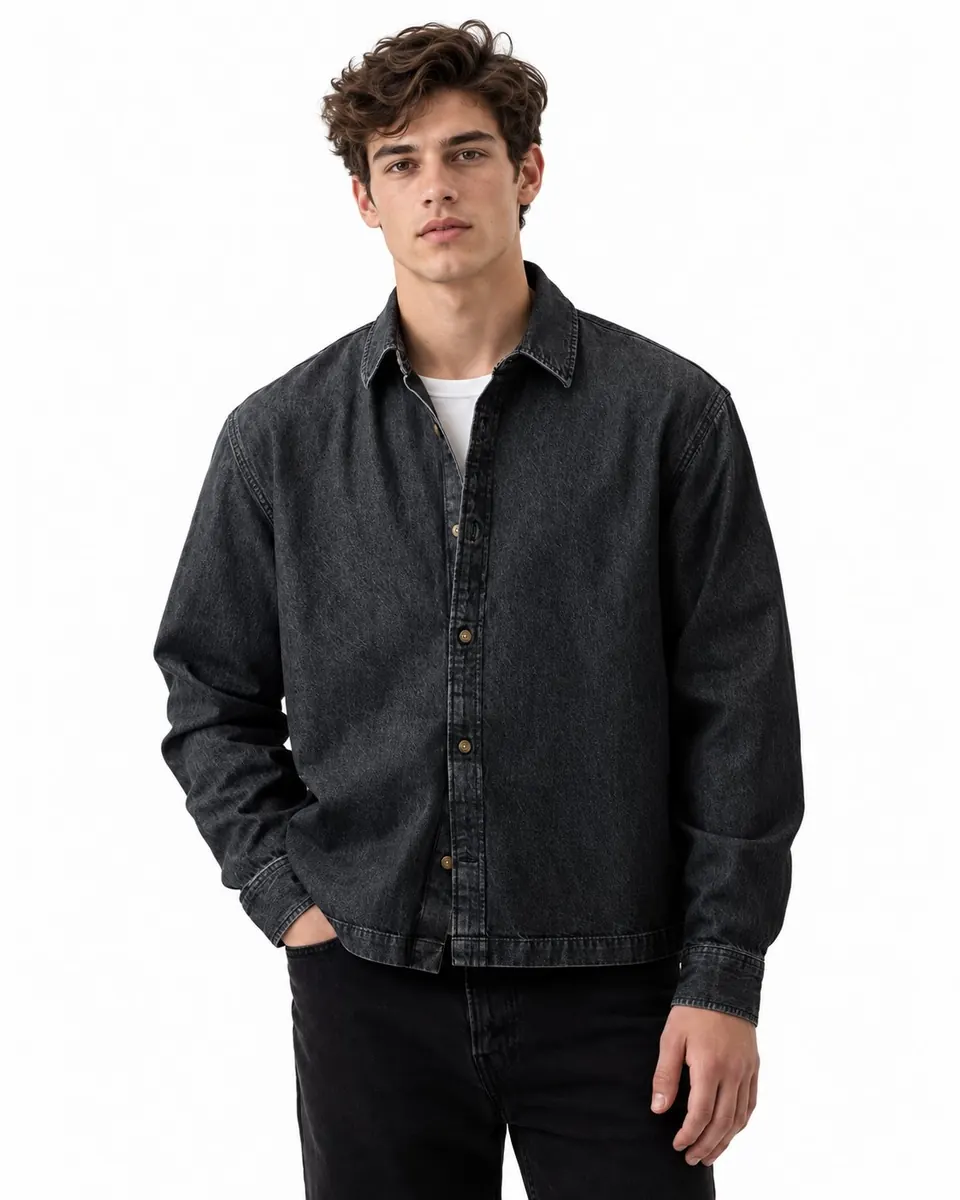
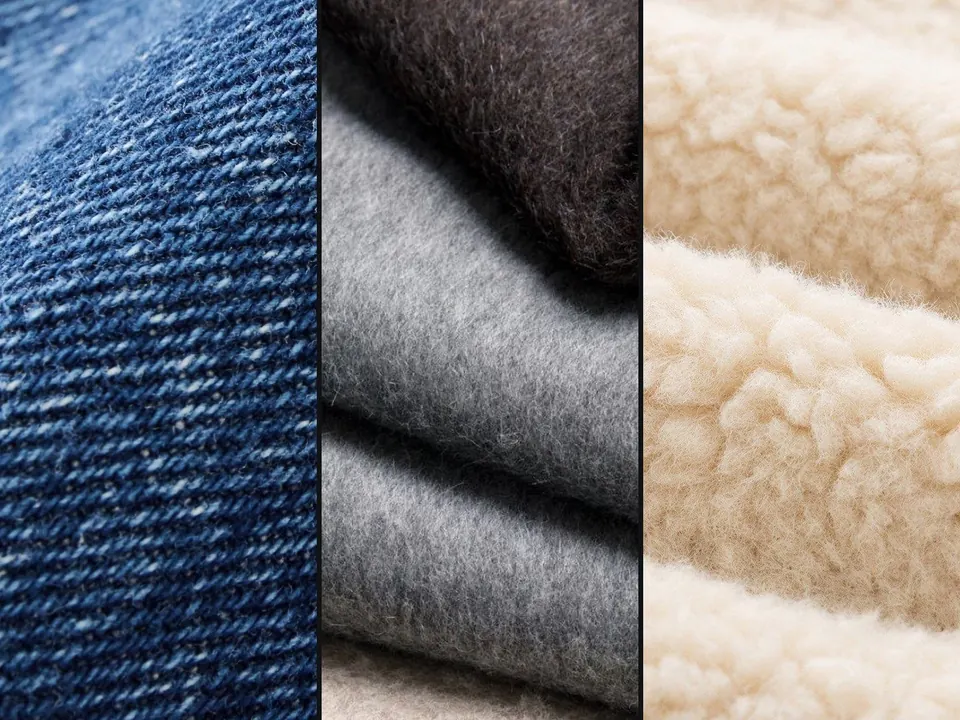
Denim gives a jacket a recognizable twill texture and a structured casual appearance. Composition, fabric weight and any stretch component affect comfort, shape and seam behavior. Heavy-looking denim is not automatically suitable for every oversized fit or pocket construction.
Wash treatments, fading, abrasion and color variation change the final look—and can alter dimensions or shade consistency. If a specific worn-in appearance is part of the brief, review garment wash samples, trim compatibility and care requirements before approving bulk production. Reinforcement, topstitching and metal hardware also contribute to the final result.
4. Varsity jackets: manage material contrast
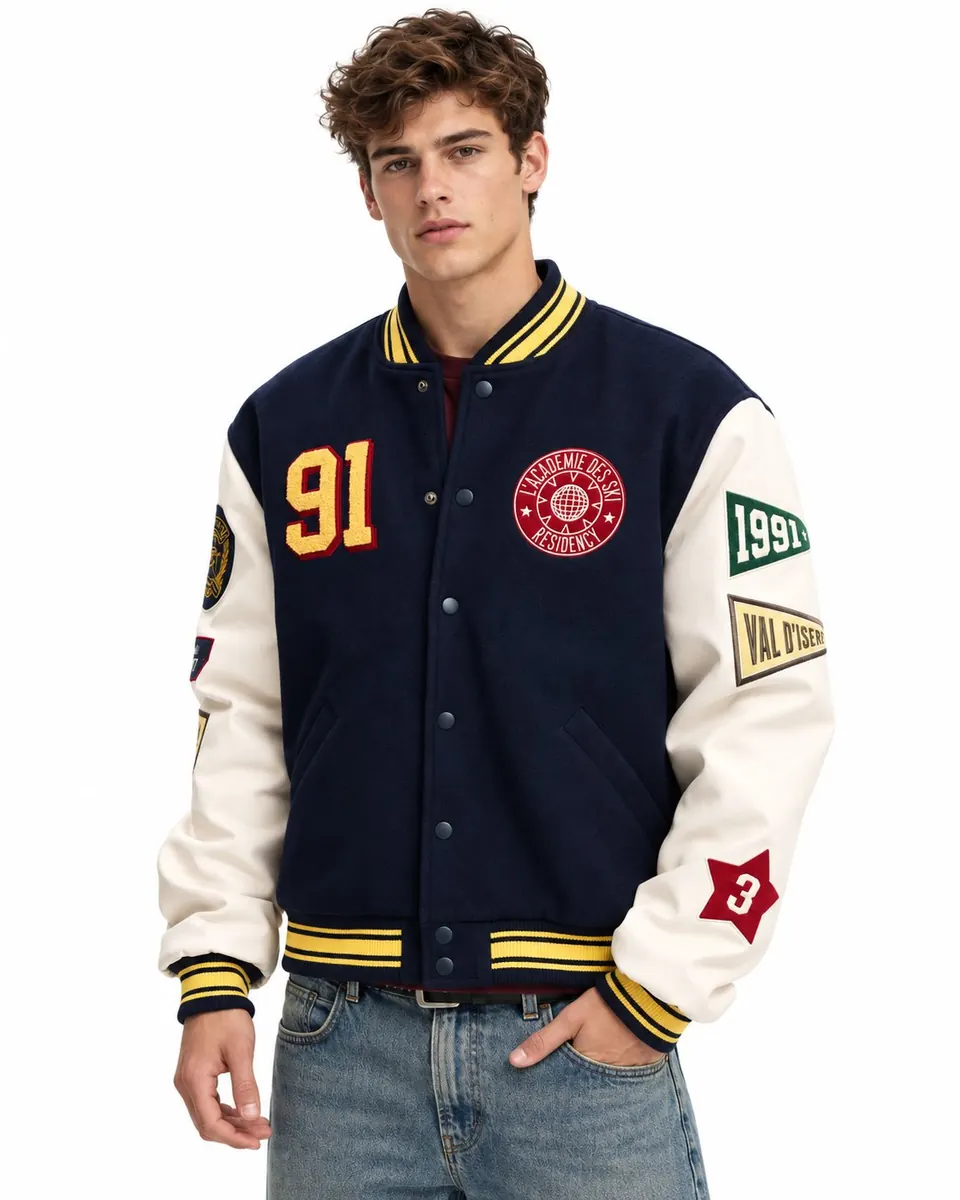
Varsity and baseball-inspired jackets often mix materials: a more structured body fabric with contrasting sleeves, rib details, patches and embroidery. Depending on the design direction, the body may use wool-look blends or other woven materials, while sleeves may use leather, synthetic leather or different textiles.
What matters is how these materials behave together. Check color transfer risk, seam bulk, sleeve movement, surface cleaning and the attachment of appliqué. Decorative patches should be tested on the chosen material rather than assumed to behave the same on every surface.
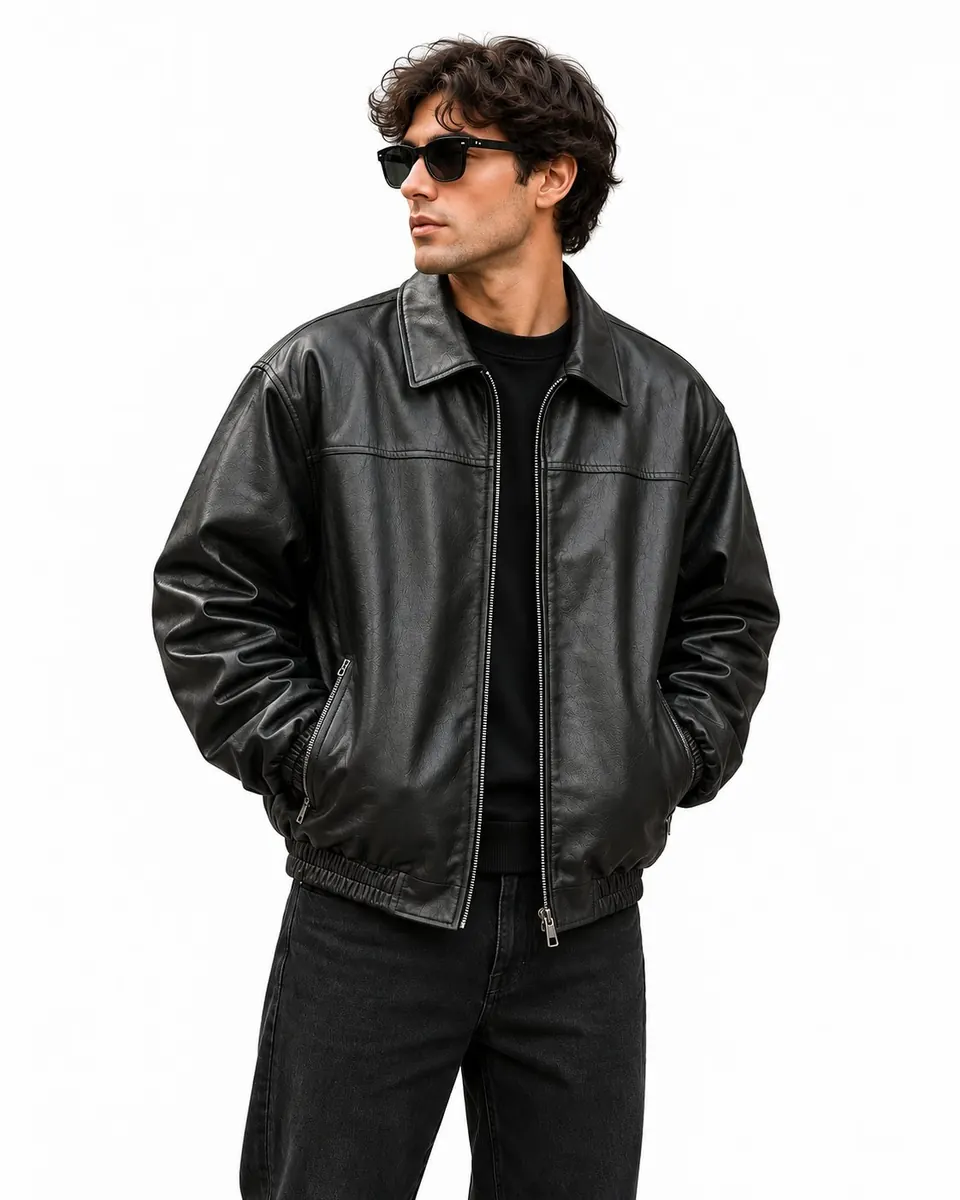
5. Leather and leather-look jackets: consider material identity and finishing
Genuine leather, coated synthetic leather and other leather-look textiles are different materials with different price, care and processing characteristics. Brands should identify what they intend to use rather than treating every leather-looking surface as equivalent.
Panel cutting, thickness consistency, needle marks, seam allowances, lining and hardware selection can affect the finished jacket. Some coated materials may have specific hydrolysis, abrasion or care limitations. Any durability or material-origin claim should match the actual material specification and supporting evidence.
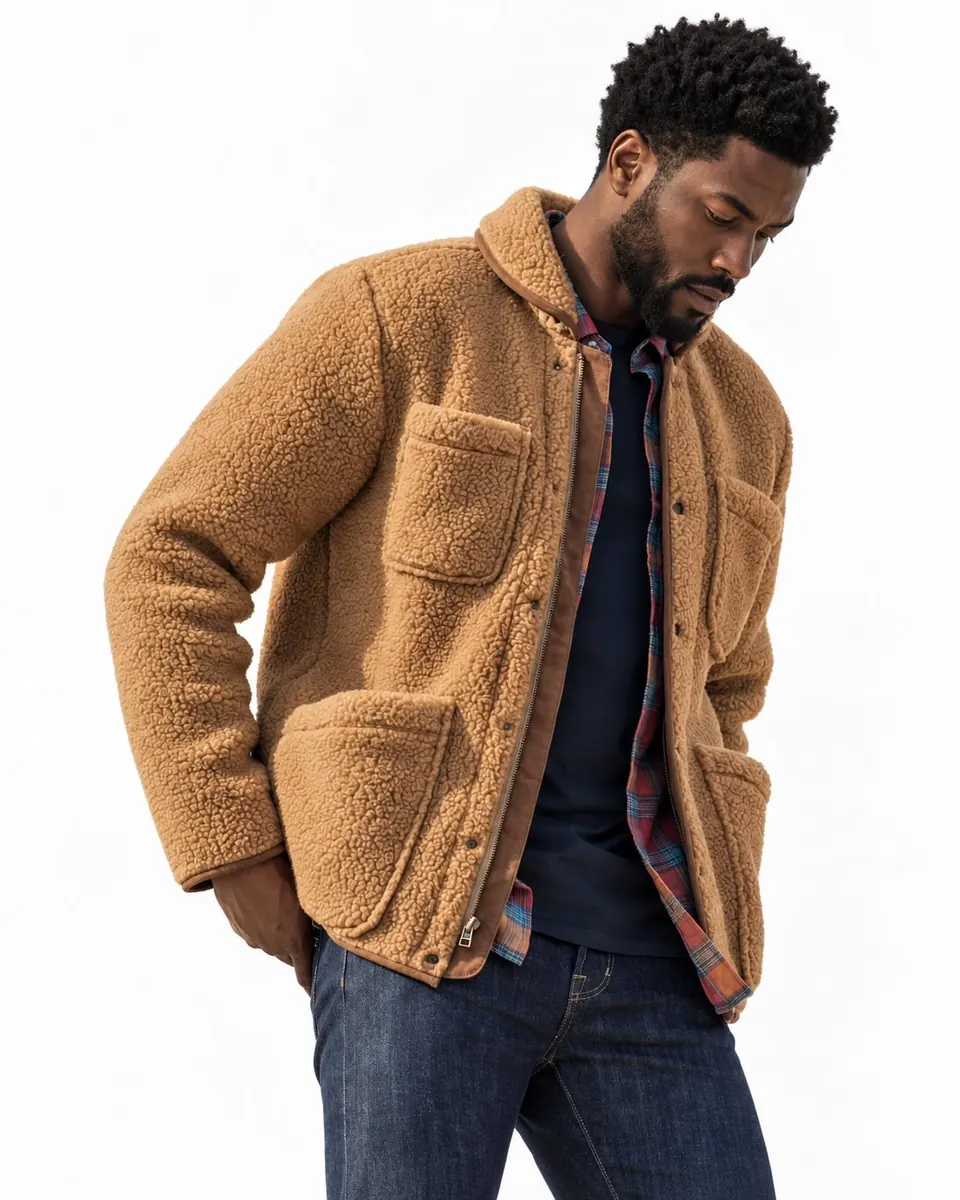
6. Fleece jackets: focus on pile, warmth and shape retention
Fleece jackets are often made from knitted fabrics with a raised or brushed surface. Options range from relatively smooth lightweight constructions to bulkier polar, sherpa-style or high-pile textures. The surface affects warmth perception, bulk, visual character and seam finishing.
Discuss fabric weight and recovery at cuffs and hem, pocket construction, zipper installation and pilling expectations. Pile direction and shade matching can become important on visible panels. When a fleece is combined with woven reinforcements, test the relationship between stretch and non-stretch areas.
Weight and GSM: useful, but not enough
GSM means grams per square meter. It is helpful when comparing fabrics of broadly similar construction, but it does not on its own tell you how warm, durable, stiff, breathable or premium a jacket will feel. Two fabrics with the same GSM may behave very differently because of fiber composition, weave or knit, finish and thickness.
Use GSM as one input alongside hand feel, drape, recovery, abrasion expectations, colorfastness, shrinkage or dimensional stability, and the intended washing method. Agree on which characteristics should be checked for the final material.
Decoration, trims and testing must match the fabric
Embroidery may require backing or stabilization; heat-applied graphics need temperature and pressure compatibility; washing can affect some coatings or color combinations; large patches change local stiffness. Zipper tape, sliders, buttons and snap attachments should be selected for the actual shell and seam construction.
If the design includes a performance claim, agree on the test method and reporting scope before publishing it. A water-repellent zipper does not automatically make a whole garment waterproof; a branded component does not imply that the finished jacket has been tested as a system.
A fabric decision checklist for brands
Prepare a clear shortlist describing end use, desired visual reference, silhouette, shell preference, lining or insulation needs, texture, weight direction, color palette, decoration plan, care needs and any verifiable performance target. Then ask for swatches or appropriate prototypes and keep final approvals documented.
Selecting the right fabric is a design and engineering decision. The better the material brief, the easier it is to develop a jacket that behaves as intended, not simply one that looks convincing in a photograph.
Frequently asked questions
Is a higher GSM always better for jackets?
No. GSM measures mass per unit area, not overall quality or performance. Construction, fiber, finish and intended use must be considered together.
Does a DWR finish mean a jacket is waterproof?
No. A durable water-repellent finish can help water bead on a surface, but verified waterproof performance depends on the complete material and garment construction and suitable test evidence.
Can the same fabric be used across different jacket types?
Sometimes, but pattern behavior, fit, lining, trims and intended use may require different material choices. The fabric should be assessed for each design rather than reused automatically.
Your next step
Choosing fabric for a new jacket collection? Share your reference images, desired silhouette, intended season and quantity range with RUIXING through Start a Project. Fabric availability, finishing options and any performance requirements can then be discussed for the specific design.